Invoices that satisfy the tax authority
VAT invoices generated from the job card itself, formatted for ZATCA in Saudi Arabia and the FTA in the UAE.
How vat invoicing works
Finish the job
Parts and labour are already on the card from the work itself.
Generate the invoice
It is built from the job, so it cannot drift from what was done.
VAT applied by country
The branch decides the rate — Qatar, the UAE and Saudi Arabia differ.
Keep the record
Numbered, consistent and retrievable if you are ever asked for it.
What this replaces
- Invoices typed by hand, with the VAT worked out on a calculator
- Formats that do not meet what the authority expects
- Records that would not survive an audit
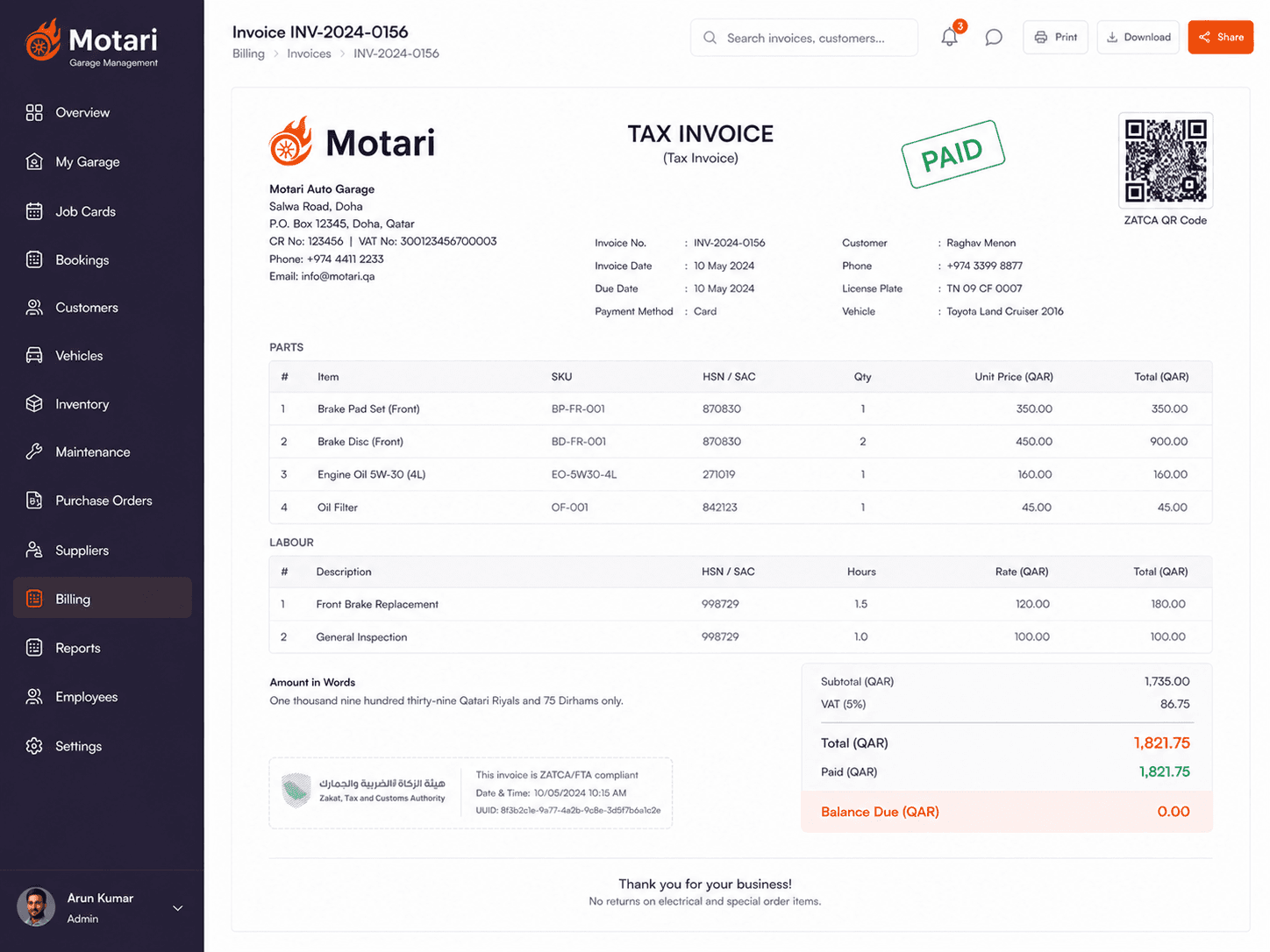
What VAT Invoicing does
Built from the job
The invoice reflects the parts and labour actually recorded, so it cannot drift from the work.
Correct VAT per country
The rate follows the branch — 0% in Qatar, 5% in the UAE, 15% in Saudi Arabia.
Audit-ready records
Consistent, numbered and retrievable long after the car has left.
VAT rates and invoice requirements differ by country and change over time. Motari follows the current ZATCA and FTA requirements, but you remain responsible for your own tax filings — check with your accountant.
Included with vat invoicing
- ZATCA (KSA) and FTA (UAE) invoice formats
- Correct VAT rate per branch country
- Built from the job card, not re-typed
- Sequential numbering you can audit
- Arabic and English on the same invoice
- Retrievable long after the job closed
Common questions
See it on your own jobs
Book a 20-minute demo on WhatsApp and we will walk through it with a real job from your workshop.